The Geometry of Stability: Why 4-Strand Ropes Rule the Suspension Industry
Wiki Article
When you are standing on a suspended construction platform hundreds of feet in the air, the only thing between you and gravity is a set of steel cables. In the high-stakes world of high-rise construction, window washing, and bridge maintenance, standard wire rope just doesn’t cut it.
That is why the industry relies on a highly specialized engineering marvel: the 4x31SW+FC Wire Rope.
Here is a deep dive into what this alphanumeric code actually means, and why this specific cable is the gold standard for construction platforms and suspended scaffolding.
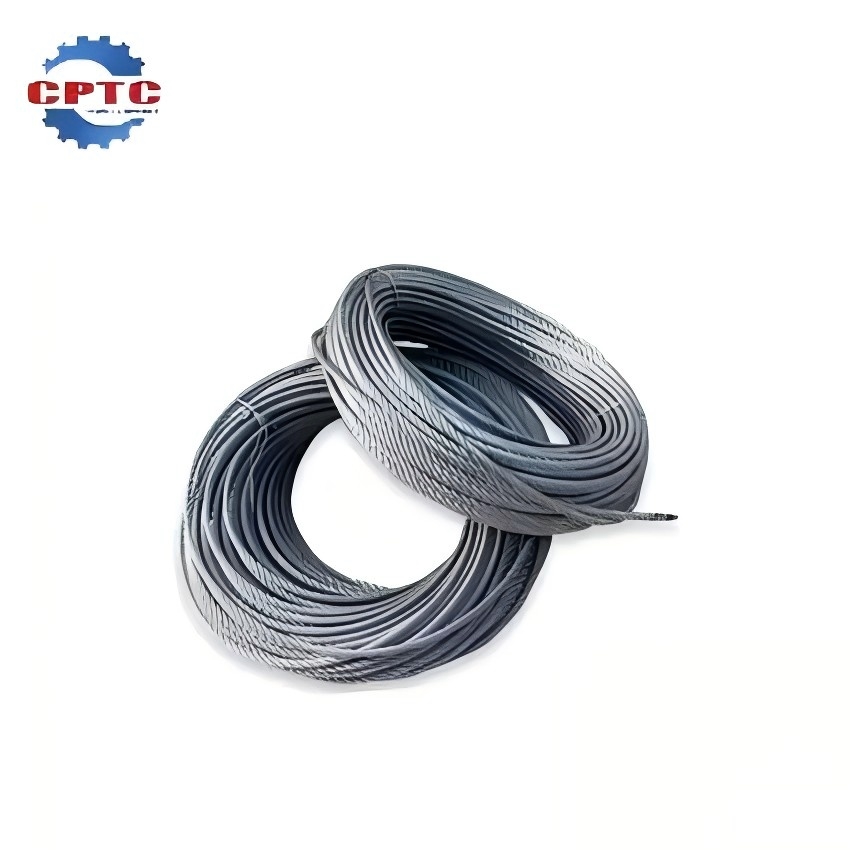
- Wire Rope
Decoding the Anatomy: What does "4x31SW+FC" mean?
Wire rope terminology can look like an alien language, but breaking it down reveals exactly why this rope is uniquely qualified for heavy lifting.
4 (Number of Strands): Most standard engineering wire ropes have 6 or 8 strands. A 4-strand rope is a deliberate choice. With fewer, thicker strands, the rope achieves a unique cross-sectional geometry that offers incredible stability and specific resistance to twisting.
31 (Wires per Strand): Inside each of those 4 main strands are 31 individual steel wires bundled together. This high wire count provides an optimal balance between flexibility and robust strength.
SW (Seale Warrington): This refers to the arrangement of those 31 wires. Warrington-Seale is a specialized construction combining two layouts:
Seale: Uses large outer wires to resist abrasion and wear.
Warrington: Interlaces different wire sizes to maximize steel density and strength within the strand.
FC (Fiber Core): At the absolute center of the entire rope sits a synthetic or natural fiber core instead of a steel one. This core acts as a cushion for the outer strands and serves as a reservoir for lubricant, keeping the rope flexible and reducing internal friction.
Why Construction Platforms Demand This Exact Rope
Suspended platforms (often called swing stages) operate under incredibly strict safety regulations. Here is why the 4x31SW+FC configuration is uniquely suited to meet those demands:
1. Exceptional Rotation Resistance (Non-Spin)
When a platform is suspended by long, vertical cables, standard ropes tend to unlay (untwist) under load. This causes the platform to spin or sway dangerously. Because of its 4-strand design and specific lay direction, the 4x31SW+FC rope is inherently rotation-resistant. It keeps the platform perfectly steady, even at extreme heights.
2. High Flexibility for Small Hoist Drums
Construction hoists and traction climbers use relatively small internal drums and sheaves. A stiff steel cable would crack or fatigue rapidly under constant bending. The Fiber Core (FC) combined with the 31-wire strand configuration allows the rope to bend tightly around hoist mechanisms without sacrificing its structural integrity.
3. Superior Wear and Abrasion Resistance
Construction sites are brutal environments. Cables scrape against concrete edges, debris drops on them, and they endure harsh weather. The Seale (SW) design places larger, tougher steel wires on the outside of each strand. This creates a rugged "armor" that can handle severe abrasion without snapping the delicate inner wires.
4. Smooth Spooling and Low Stretch
The dense packing of the Warrington-Seale construction ensures that the rope retains its perfectly round shape under tension. This prevents the rope from flattening or crushing itself inside the hoist drum, ensuring smooth, predictable ascents and descents. Furthermore, the construction minimizes "elastic stretch," meaning the platform won't bounce wildly when workers step onto it.
Technical Specifications At A Glance
While exact metrics vary by manufacturer, here is what you can generally expect from a standard 4x31SW+FC platform wire rope:
Feature | Specification / Benefit |
Common Diameters | Typically 8.0mm to 10.0mm for standard traction hoists (e.g., Sky Climber, Power Climber). |
Material Grade | High-tensile galvanized steel (for superior corrosion resistance). |
Core Type | Lubricated Fiber Core (FC). |
Primary Advantage | High breaking load paired with excellent flexibility and anti-twisting properties. |
Maintenance and Safety: The Lifeline of the Rope
Because these cables are critical to life-safety, they require strict maintenance protocols:
The Golden Rule of Wire Rope Safety: > Never compromise on lubrication. The fiber core acts like a sponge; if it dries out, internal friction will destroy the cable from the inside out.
Daily Inspections: Operators must check for kinked strands, bird-caging (where strands separate), or broken outer wires before stepping onto the platform.
Corrosion Control: Because these ropes work outdoors, galvanized steel is preferred to fight off rust caused by rain, humidity, and chemical exposure from masonry cleaning.
Report this wiki page